Forex trading remains the most liquid and accessible financial market in the world. With trillions of dollars exchanged daily, it offers unmatched opportunities—but also significant risks for those who approach it without structure.
One of the most critical decisions a trader makes is selecting the right platform. Tools, execution speed, and user experience can directly impact results. For example, platforms like the Pocket Option trading platform provide access to fast-paced trading environments where timing, precision, and discipline are essential.
In this guide, we’ll go deep into Forex trading—from fundamentals to advanced strategies—so you can approach the market like a professional, not a beginner.
What Is Forex Trading?
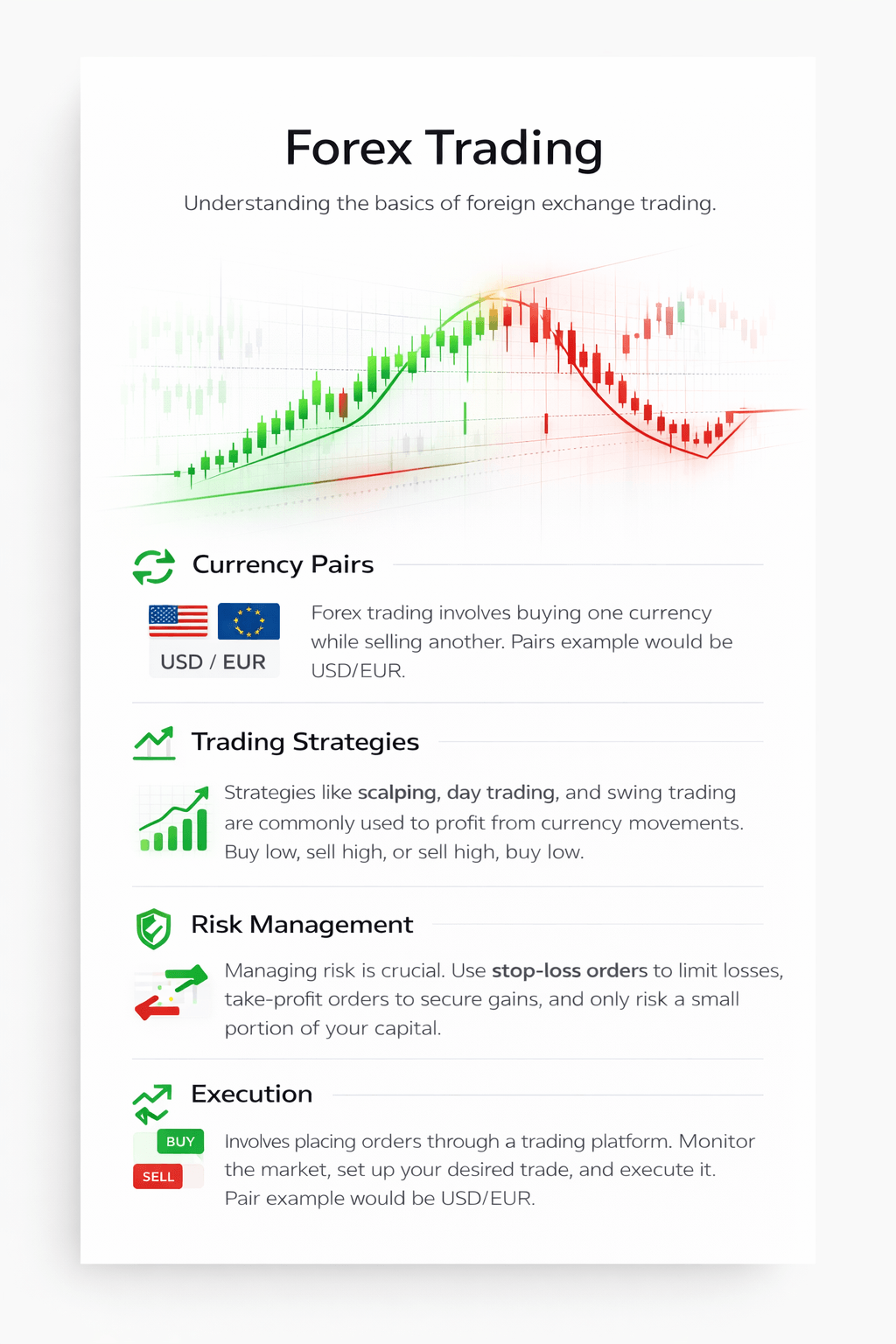
Forex (foreign exchange) trading is the process of buying one currency while simultaneously selling another. Currencies are always traded in pairs.
Popular Currency Pairs
- EUR/USD — the most traded pair globally
- GBP/USD — known for volatility
- USD/JPY — influenced by interest rate policies
- AUD/USD — sensitive to commodities
When you trade Forex, you’re speculating on how one currency will move relative to another.
How the Forex Market Operates
Unlike stock markets, Forex is decentralized and operates over-the-counter (OTC).
Main Participants
- Central banks
- Commercial banks
- Institutional investors
- Retail traders
This global network creates continuous liquidity and price movement.
Trading Sessions and Volatility
| Session | Location | Market Behavior |
|---|---|---|
| Asian | Tokyo | Lower volatility |
| European | London | High activity |
| US | New York | Strong movements |
The most volatile periods occur when sessions overlap, particularly London and New York.
Key Concepts Every Trader Must Know
1. Pip
A pip is the smallest price movement in Forex.
2. Leverage
Leverage allows you to control large positions with smaller capital—but increases risk.
3. Spread
The difference between the bid and ask price.
4. Margin
The required capital to open a position.
Forex Trading Strategies
There is no universal strategy. The best approach depends on your personality, risk tolerance, and time commitment.
1. Scalping
- Very short-term trades
- High frequency
- Requires fast execution
2. Day Trading
- Positions opened and closed within a day
- No overnight risk
3. Swing Trading
- Trades held for several days
- Captures larger price moves
4. Trend Following
- Trading in the direction of the trend
- Uses indicators like moving averages
| Strategy | Timeframe | Complexity | Risk |
|---|---|---|---|
| Scalping | Minutes | High | High |
| Day Trading | Hours | Medium | Medium |
| Swing Trading | Days | Lower | Lower |
Technical vs Fundamental Analysis
Technical Analysis
- Charts and indicators
- Patterns and trends
- Entry and exit signals
Fundamental Analysis
- Economic data (GDP, inflation)
- Interest rates
- Geopolitical events
Professional traders often combine both approaches.
Risk Management: The Real Edge
Most traders lose money because they ignore risk.
Golden Rules
- Risk only 1–2% per trade
- Always use stop-loss
- Never overleverage
A good trader focuses on protecting capital first.
The Importance of Trading Platforms
Your trading platform is your execution engine.
Key Features to Look For
| Feature | Importance |
|---|---|
| Execution speed | Prevents slippage |
| Interface | Improves decision-making |
| Reliability | Avoids missed trades |
| Tools | Supports analysis |
Fast-paced environments demand precision, and not all platforms are built equally.
Psychology of Forex Trading
Even the best strategy fails without emotional control.
Common Psychological Mistakes
- Fear of missing out (FOMO)
- Revenge trading
- Overconfidence
Discipline and consistency define long-term success.
Common Beginner Mistakes
- Overtrading
- Ignoring risk management
- Switching strategies too often
- Using unreliable platforms
Avoiding these mistakes already puts you ahead of most traders.
Building a Trading Plan
A trading plan is essential.
Core Elements
- Entry rules
- Exit rules
- Risk limits
- Performance tracking
Without a plan, trading becomes emotional.
Forex vs Other Markets
| Market | Liquidity | Volatility | Hours |
|---|---|---|---|
| Forex | Very high | Moderate | 24/5 |
| Stocks | High | Variable | Limited |
| Crypto | High | Very high | 24/7 |
The Role of Discipline
Forex trading is a long-term game.
- Consistency beats intensity
- Process beats profit focus
- Discipline beats emotion
This is what separates professionals from beginners.
Conclusion: Trading as a Professional Skill
Forex trading is not gambling—it’s a structured discipline that requires time, effort, and continuous learning.
The most successful traders:
- Control risk
- Follow a plan
- Use reliable platforms
Because in the end, success in Forex is not about predicting the market perfectly.
It’s about managing uncertainty better than everyone else.







This article is quite detailed about Forex trading. It’s interesting to see how different strategies suit different trading styles. The emphasis on risk management and the importance of selecting the right platform are helpful points for anyone new to this.
I found the breakdown of trading sessions and volatility really informative. The overlap between London and New York seems like a key time for activity, which is something to keep in mind.
The section on psychology in Forex trading makes sense. Emotional control seems important in any kind of trading. The common beginner mistakes mentioned are also good reminders.
I like how the article compares Forex with other markets like stocks and crypto. It helps put things into perspective, especially regarding liquidity and market hours.
This article is super helpful! I always wanted to learn about Forex trading, and now I feel like I have a good starting point. Thank you for breaking it down so simply!
Wow, this makes Forex trading sound both exciting and serious. I’m definitely going to check out some platforms and start learning more. Great guide!
I didn’t know there was so much to consider with Forex trading. This post really opened my eyes, and I’m eager to try it out slowly.
This guide is awesome! It’s detailed but easy to understand for someone like me who’s just beginning in Forex trading. Thanks a lot!
🙂 Thanks for the tips on risk management! It’s great to know what to watch out for before jumping in.